Build the brand
Develop a consistent visual identity that establishes Nature Extant as a professional educational institution.
We use cookies to understand how visitors use our site and to make it better. We will only set analytics cookies if you accept. Read more in our cookies policy.
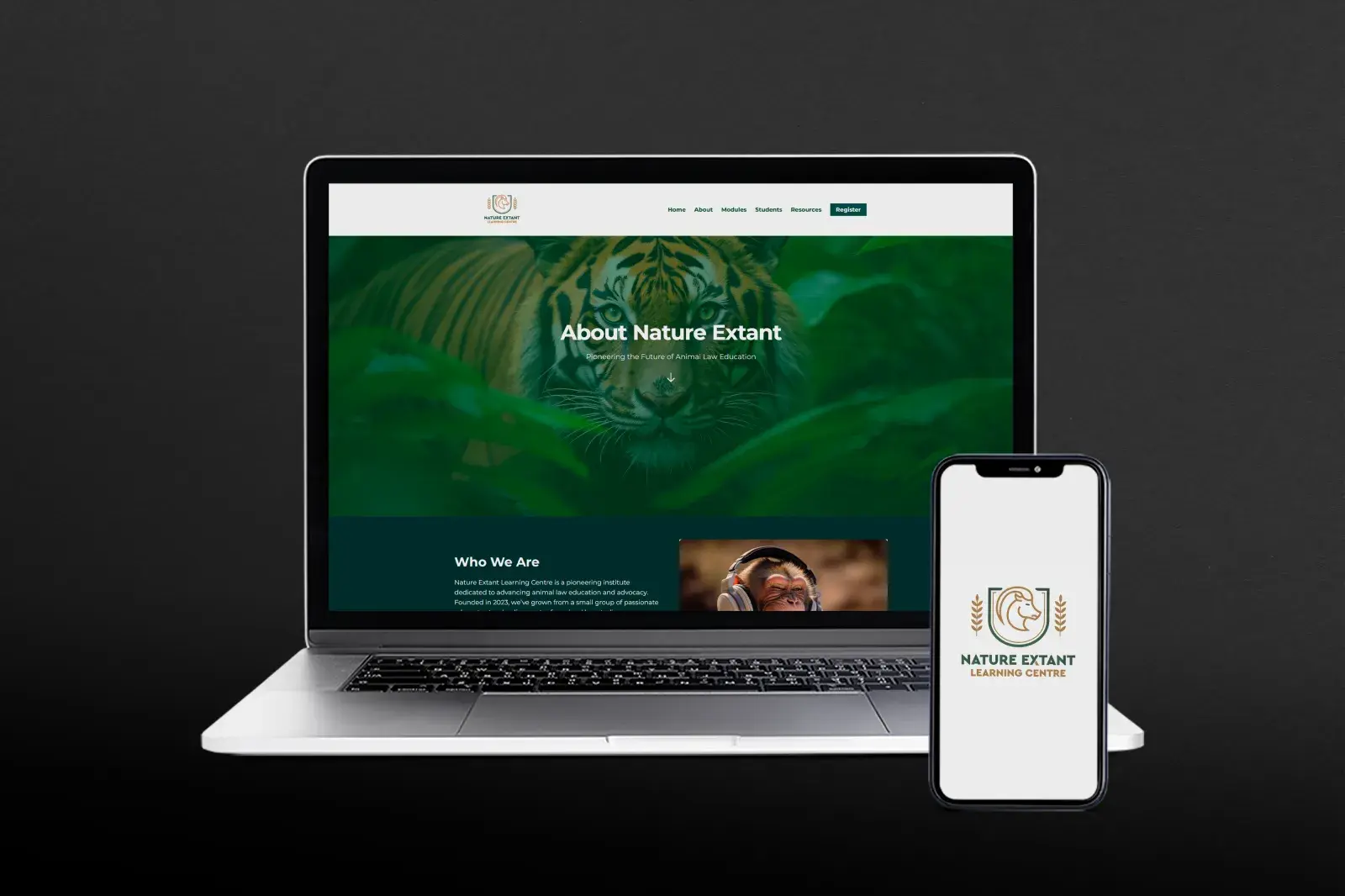
Nature Extant Learning Centre launched as a new environmental education institution, and it approached us at launch with a challenge bigger than a website: build the brand and the digital platform together. We created the visual identity and brand guidelines, then designed and developed a website built around programme discovery, student stories, graduation content, resources and a clear application pathway, supported by ongoing maintenance, social media management and digital marketing guidance.
VISIT WEBSITEThe Project
Nature Extant Learning Centre is an environmental learning institution focused on environmental awareness, education, sustainability, conservation, animal law and advocacy.
The organisation works with learners, professionals, communities, schools and organisations seeking knowledge and practical skills around environmental challenges and wildlife protection. Its programme portfolio includes ESG, Wildlife Law and Policy, Human-Wildlife Conflict, Animal Law and Welfare, Environmental Law and Climate Change, Tourism Governance and Compliance, and Wildlife Law Enforcement.
For us, this project began before the website did. Nature Extant approached us at launch with a bigger challenge: how do you build a credible brand and a digital presence for a new environmental education institution entering a specialised market?
So the project came together as brand development, digital strategy, UX research, website design, website development and digital marketing guidance, all treated as one foundation rather than a list of separate deliverables.
The Challenge
Nature Extant was entering a specialised educational space covering environmental education, animal law, wildlife protection, sustainability and advocacy. It needed to communicate credibility while staying accessible to students and working professionals who might be exploring the organisation for the first time.
The challenge had three layers.
How do you build a credible brand and digital presence for a new environmental education institution entering a specialised market?
The Opportunity
The opportunity was to create a digital platform that could introduce Nature Extant to a broad audience while laying a foundation for future growth.
Develop a consistent visual identity that establishes Nature Extant as a professional educational institution.
Give prospective students, professionals, organisations and partners one central place to discover the institution.
Turn a specialised educational offering into clear, approachable programme information.
Help students move naturally from interest, to research, to comparing options, to applying.
Use programme detail, student stories, imagery and institutional information to give people confidence in the institution.
The platform needed room for more programmes, students, events, resources and institutional milestones as Nature Extant develops.
Brand Development
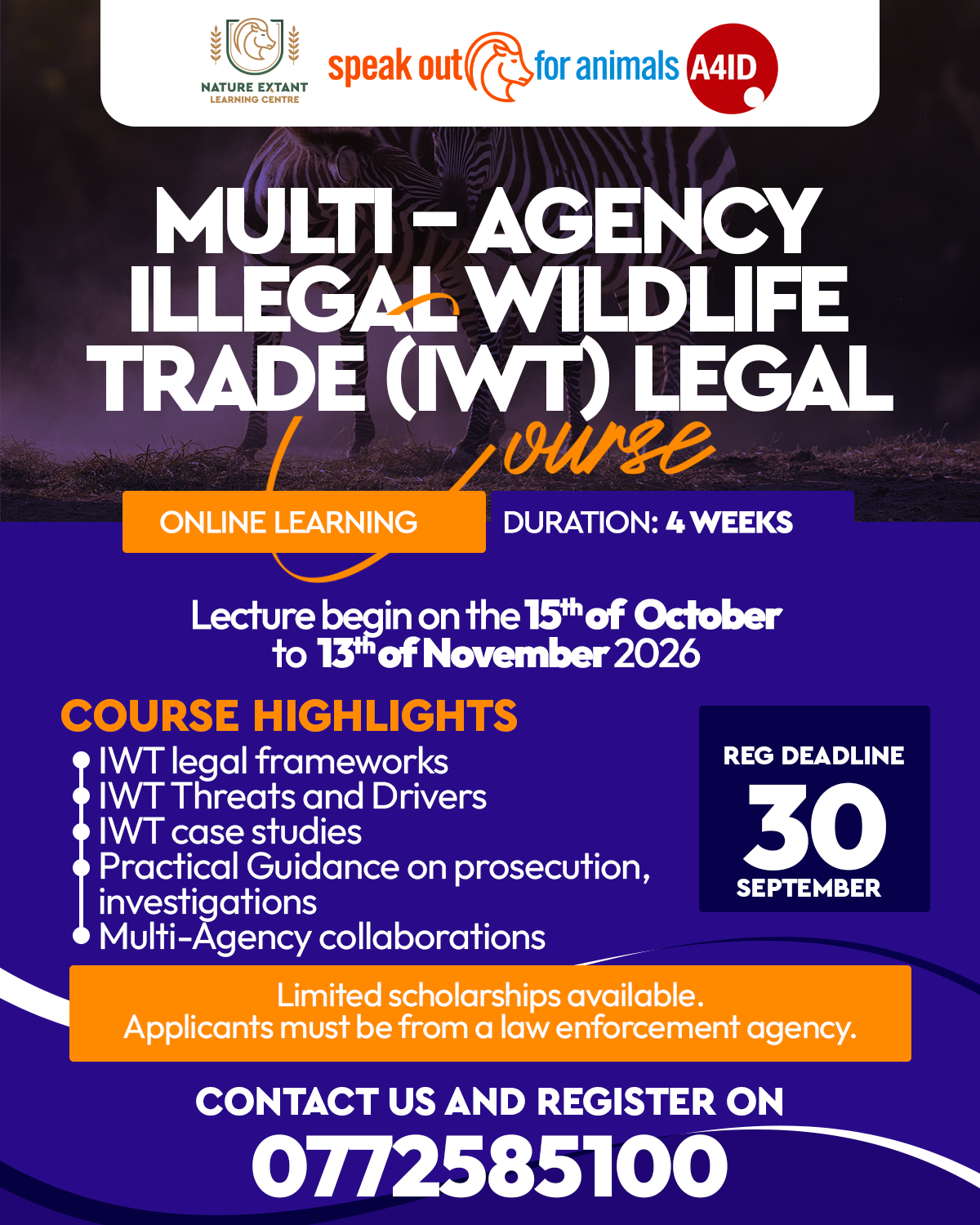
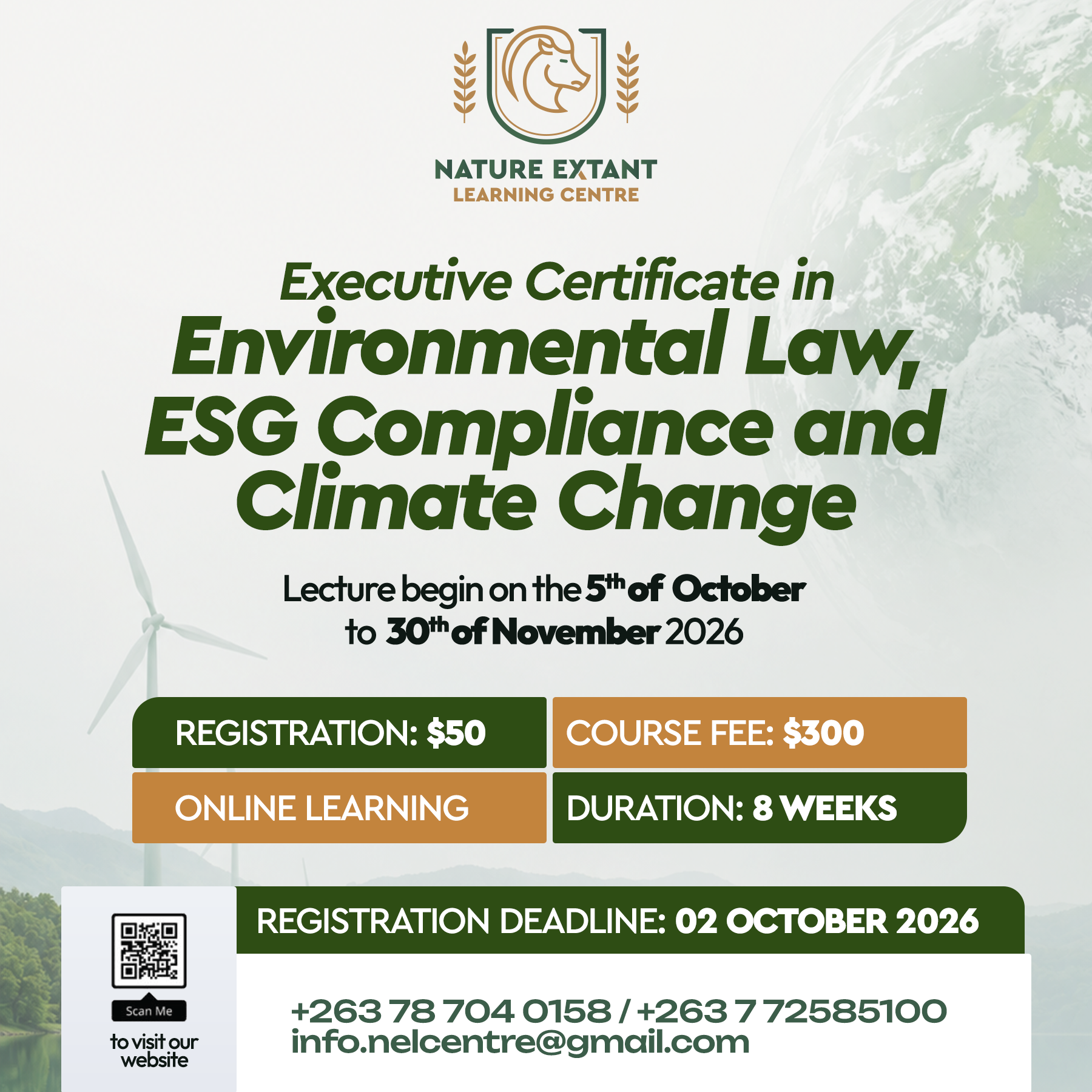
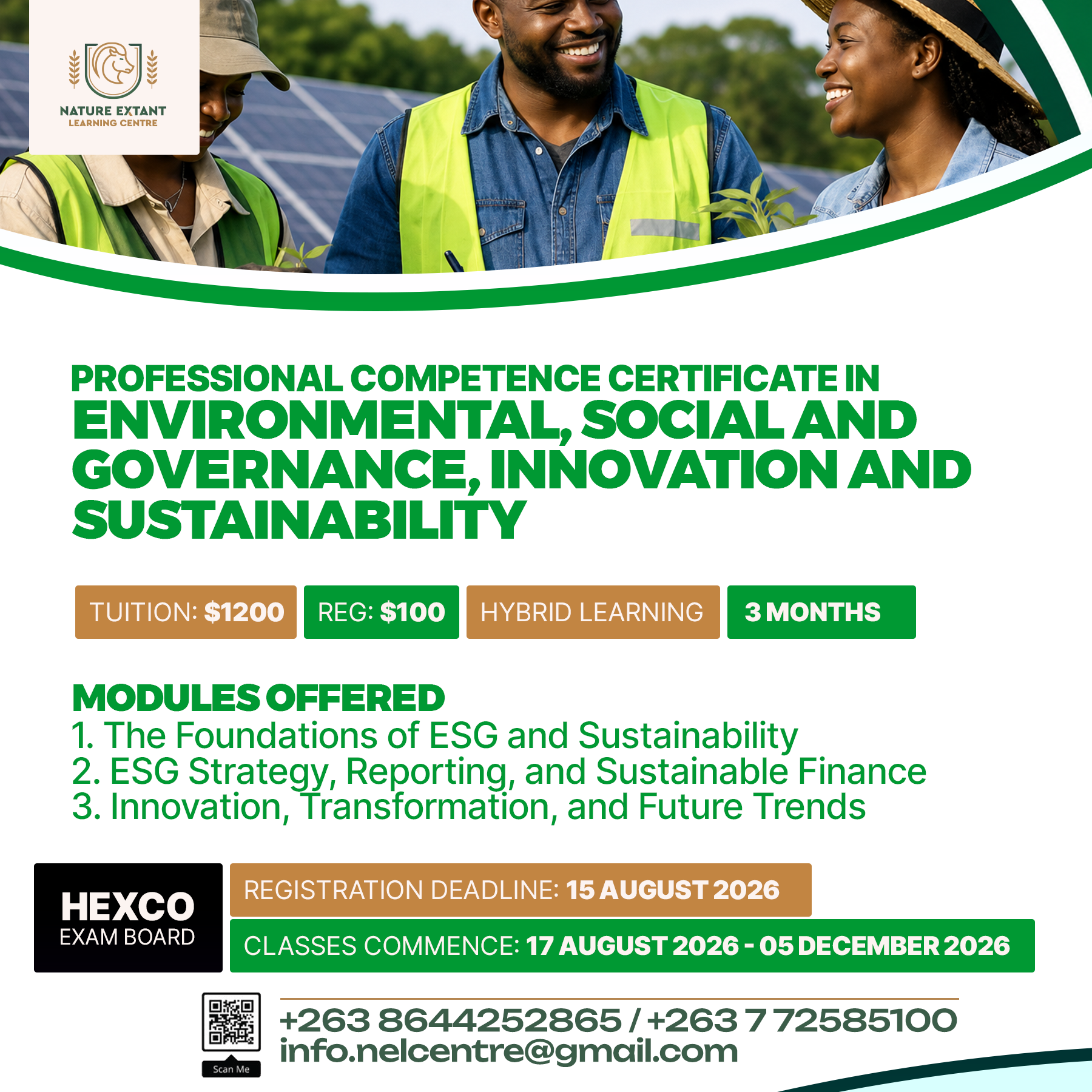
Before the website could communicate the organisation, we had to establish a consistent brand system. Logo development, brand direction, visual identity, guidelines, social media templates, business cards, digital marketing assets and visual communication guidance all needed to hold together.
The purpose was simple. Nature Extant should never look like a collection of disconnected marketing materials. It needed one recognisable visual language across every major touchpoint.
Brand Guidelines
The brand guideline system gave Nature Extant a framework for everything that would follow, from one social post to a full institutional campaign.
Logo designs
Social media templates
User Research
Research was conducted through in-person sessions, online research, telephone discussions and close study of how comparable environmental and conservation education institutions present programmes, certifications, admissions, student experiences, resources and credibility.
We focused on two things: what the organisation wanted to achieve, and the practical questions a potential learner would ask before feeling ready to apply. The live platform reflects this through a programme-led structure with dedicated programme information, student stories, resources, gallery content and a clear application pathway.
Research Findings
Our research kept pointing to the same five problems.
A brand new institution targeting audiences across Zimbabwe and the wider SADC region had almost no online footprint. People needed one place to discover the organisation and understand it.
Prospective learners needed to know whether programmes were online, physical or blended, especially those living away from the institution's location. That should not require a phone call to discover.
Students needed to compare programmes by subject, duration, certification, intake, fees, target audience and how to register. That meant a programme architecture built for comparison and decision making.
Interested users needed a clear path from discovering a programme to applying, without being forced to hunt through unrelated pages.
A new institution must prove it is active, legitimate and producing real educational experiences. That informed the student stories, graduation content, imagery and resources that now sit on the site.
Personas
Persona 01
Looking for an educational programme, professional certification or specialised knowledge. Could be a student, environmental professional, conservation practitioner, legal professional, journalist, or a government or NGO employee.
Primary goal
Find the right programme, understand it and apply.
Questions they ask
Their journey
Persona 02
Not necessarily looking for a full programme, but interested in events, workshops, community programmes, partnerships or the institution's current activity.
Primary goal
Find something to join or attend and understand how to take part.
Questions they ask
Their journey
Secondary Users
The platform also needs to communicate with schools, universities, NGOs, government institutions, environmental and conservation organisations, industry professionals, potential partners, media and alumni. That is why the website was designed as an institutional platform rather than a simple course directory.
Each audience approaches the institution differently. A learner starts with programmes. A partner starts with About. An existing student or graduate explores student content. A researcher visits Resources. The structure supports all of these entry points.
User Journeys
A learner discovers the institution, explores what is on offer, compares the options that matter and applies.
Stage 01
Discovery
The user finds Nature Extant through search, social media, a recommendation or another channel.
User need: Find a credible institution to learn with.
Website response: A clear introduction to who Nature Extant is and what it offers.
Stage 02
Orientation
The user learns what the organisation does.
User need: Understand the institution quickly.
Website response: Clear institutional information on the homepage and About pages.
Stage 03
Programme exploration
The user browses the programmes available.
User need: See what is on offer without digging.
Website response: A structured programmes section with clear categories.
Stage 04
Programme evaluation
The user reviews duration, fees, certification, intake, focus and eligibility.
User need: Compare programmes and make a decision.
Website response: Programme cards that surface the key information at a glance.
Stage 05
Registration
The user chooses to apply.
User need: Know exactly how to start.
Website response: Clear calls to action throughout the journey.
Stage 06
Application
The user submits an application or follows the registration process.
User need: A simple, friction-free application step.
Website response: A dedicated application pathway.
Stage 07
Student
The user joins the Nature Extant learning community.
User need: Feel supported once enrolled.
Website response: Student-focused content and institutional activity.
Stage 08
Alumni
The relationship continues beyond the programme.
User need: Stay connected to the institution.
Website response: Graduation and alumni content that builds the community.
A participant finds an event or community initiative, understands what it involves and joins in.
Stage 01
Discovery
The user finds an event, workshop or initiative.
User need: Learn what is happening.
Website response: Events and activities surfaced clearly.
Stage 02
Explore
The user reads the details.
User need: Understand what is involved.
Website response: Clear event and initiative information.
Stage 03
Understand
The user checks purpose, location and participation requirements.
User need: Know if it is for them.
Website response: Practical details presented up front.
Stage 04
Register or contact
The user follows the registration process or gets in touch.
User need: Join without friction.
Website response: A direct registration or contact path.
Stage 05
Participate
The user attends or takes part.
User need: Arrive informed.
Website response: The information needed to show up and join.
Information Architecture
The architecture was built around the main questions people ask about Nature Extant. Each section serves a clear purpose, so users can approach the institution from whatever intention brought them to the site.
Design Process
The project moved through a clear process, testing the structure and flow before investing in final visuals.
We started by understanding the organisation, its educational objectives, target audiences, programme structure, competitive environment and registration requirements.
Before the website, we established the visual foundation: logo, guidelines, typography, colour direction, social templates, business cards and digital assets.
We mapped the content and how users would move from the institution, to programmes, to programme details, to application, as well as the event participation path.
The sitemap established the hierarchy of pages so the website would not become a collection of disconnected pages.
We worked through layout, content hierarchy, navigation, user flow and calls to action on paper first.
We tested desktop and mobile layouts, programme structures, content density and application pathways digitally.
We tested the experience before detailed visual design, refining the relationship between information and interaction.
We developed the final interface around education, modernity, professionalism, the environment and credibility, keeping it human and accessible.
Interactive prototypes showed how users would move through programmes, programme details, student stories, resources, the gallery and the application journey.
Accessibility was treated as part of the interface design, not a final stage addition.
Accessibility
Programme information was structured so users can quickly understand what matters most.
Typography, line spacing and content width were considered to make educational information easier to read.
Text, buttons and interactive elements were designed with sufficient contrast in mind.
Navigation and calls to action were structured so important actions are easy to locate and understand.
The Digital Product
The website was designed to be more than a promotional site. It connects the brand, the institution, its programmes, students, resources and registration into one platform.
Answers the most important questions quickly: who is Nature Extant, what does it do, what can I study, why does it matter and how do I get involved.
Each programme communicates the decision-making information students need, including title, category, description, duration, certification, intake, fees and the registration pathway.
Programmes are grouped clearly so different learners can find their way without being overwhelmed.
Calls to action sit throughout the journey so users never need to hunt for the next step.
Real student stories, photography and graduation content bring the institution to life.
The inaugural graduating class is celebrated as proof of an active learning community.
Useful educational and environmental content extends the platform beyond marketing.
Photography bridges the gap between the digital platform and the physical learning experience.
The brand system carries through navigation, programme cards, buttons, sections and social assets, so what Nature Extant says and how it looks always match.
Digital Marketing Support
Our work did not stop at launch. We wanted the website to be the destination for traffic generated across the organisation's channels.
Supporting Nature Extant's online communication and audience engagement.
Creating a consistent visual direction for the organisation's digital communication.
Practical marketing guidance and strategy as the institution established its online presence.
The Result
The outcome is a platform designed to support Nature Extant as it grows. It brings together institutional information, programme discovery and comparison, registration, student stories, graduation content, a gallery, resources, contact and clear calls to action.
Starting with the brand, then the digital presence, programme discovery, the student journey, registration, student stories, resources and digital marketing, the organisation gained a connected system rather than a single brochure page.
The Impact
Rather than launching with a logo and a basic website, Nature Extant gained a broader digital system built to evolve with the institution. The platform is designed around three objectives.
New audiences across Zimbabwe and the wider region can find the institution and understand its programmes.
Programmes, fees, certification and how to apply are clear without a single phone call.
New programmes, student stories, graduation milestones, resources and campaigns can keep building on the same foundation.
What We Learned
The Nature Extant project reinforced six principles that now shape how we approach education clients.
Users should not have to contact an institution just to learn the basics about its programmes.
Duration, fees, certification, intake and focus should be easy to find at a glance.
Student stories, graduation, photography and real institutional activity matter more than polish.
A brand becomes meaningful when it is consistently applied across digital interfaces, social media and physical materials.
The website should serve the institution's future, not only its launch stage.
The platform should support users from first discovery, through programme evaluation and application, to learning and eventually alumni engagement.
Project Services
Development of the visual foundation used across the organisation's digital and physical communications.
Research-led UX and UI design focused on educational discovery and user journeys.
Development of the responsive Nature Extant digital platform.
Ongoing support and updates to keep the platform current.
Support for digital communication and audience engagement.
A consistent visual direction for the organisation's social platforms.
Marketing guidance to support the organisation's visibility and growth.
See the project
Explore the live website and experience the digital platform.
Let's talk
Whether you are launching an organisation, introducing a new service or transforming an existing business, Blacklemur Innovations can help you build the brand and the digital experience around it.